

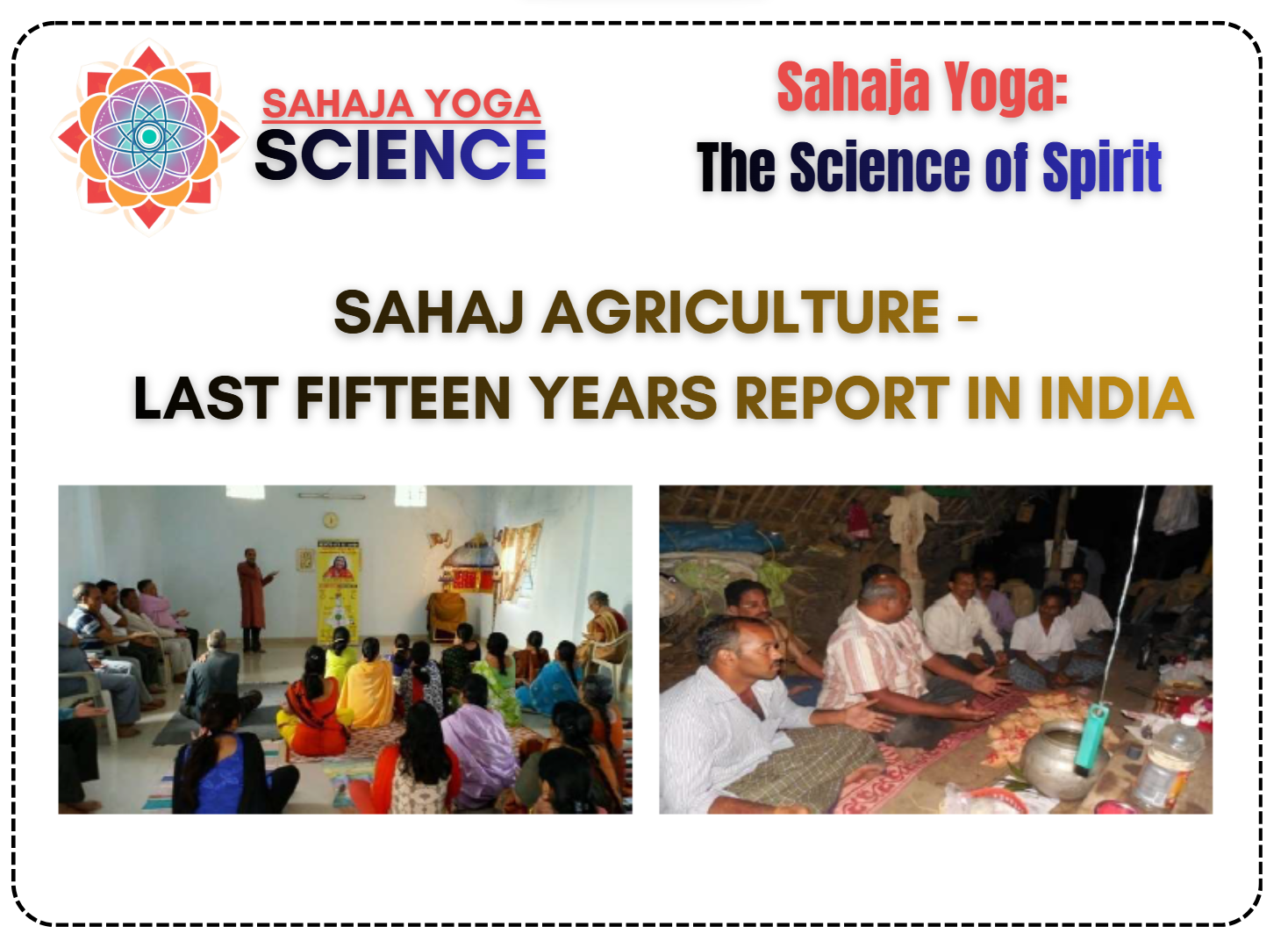
Sahaj Agriculture – Key Points
- Initiation by Shree Mataji:
- Her Holiness Shree Mataji Nirmala Devi, founder of Sahajayoga, shared her experience of using Sahajagriculture to improve sunflower crop yields without any expenditure during her interaction with scientists at Rahuri Agricultural University in 1985.
- Initial Trials and Observations:
- Agricultural experts conducted field trials in Maharashtra.
- Crops exposed to Sahaj vibrations showed significantly higher yields compared to non-vibrated crops.
- National Project Launch:
- Following Maharashtra’s success, the National Sahajagriculture Project was launched by the National Sahajayoga Trust in 2012.
- Programs included awareness campaigns, exhibitions, and training camps in rural areas across India.
- Adoption by Farmers:
- Over 300,000 farmers across various states adopted Sahajagriculture.
- Reports indicated improved crop yields and better protection against pests and diseases.
- Extension to Other Sectors:
- Positive results were also observed in animal husbandry, fisheries, horticulture, medicinal plants, and forestry.
- Scientific Validation:
- Several agricultural universities and scientists verified the effects of divine vibrations on crop yields.
- National Sahaj Agricultural Project officials collaborated with ICAR (Indian Council of Agricultural Research) to conduct experiments at 10 National Agriculture Research Centres in Rajasthan, Maharashtra, Gujarat, and Andhra Pradesh.
- Majority of ICAR institutes reported positive outcomes.
- National Seminars & Knowledge Sharing:
- Findings and results of Sahajagriculture are discussed in national seminars.
- Average yield improvements of 10–30% were observed in vibrated crops like wheat, rice, jowar, pulses, cotton, and soybean.
- Domestic animals fed with vibrated fodder also showed increased milk production.
- Future Expansion & Policy Support:
- Experiences need to be shared nationally and globally.
- Upscaling Sahajagriculture requires support from policy makers and agriculture departments.
- Potential for expansion into allied sectors like animal husbandry, fisheries, bee keeping, horticulture, medicinal plants, and forestry with government and stakeholder collaboration.